L-SA L-SA
  • Categories
    • Scientific and Technical Articles – Community Contributions
    • Site Feedback – Structural Project Case Studies and Lessons Learned
    • Calculation Notes – Real Cases and Applications
    • Downloadable Calculation Tools – Utilities and Methodological Guides
    • Professional Insights – Shared Contributions and Industry Watch
    • Themes
      • Structural materials
        • Soil-Geotechnics
        • Concrete
        • Reinforced concrete
        • Prestressed concrete
        • Steel
        • Steel-concrete composite
        • Aluminium
        • Cable
        • Timber
        • Timber-concrete composite
        • Timber-steel composite
        • Stone
        • Earth
        • Other material
      • Types of works
        • Ground reinforcement
        • Special foundation
        • Foundation
        • Slab-mat suspended slab
        • Retaining wall
        • Framework
        • Column
        • Beam
        • Wall
        • Floor slab
        • Facade
        • Structure (roof)
        • Roof
        • Other structure
      • Study phases
        • Assumptions
        • Design
        • Structural analysis and sizing
        • Construction provisions
        • Drawing
        • Description-specification
        • Construction monitoring
        • Diagnosis
        • Rehabilitation
        • Other study
      • Types of analysis
        • Gravity load analysis
        • Bracing
        • Seismic analysis
        • Fire scenario analysis
        • Deformation
        • Vibration
        • Durability
        • Environmental impact
        • Pathology
        • Other analysis
    • Featured
    • About
      • The OpenLAB project
      • OpenLAB Terms and Conditions
      • Contact us
      • L-SA
    • Login
    L-SA L-SA
    • Categories
      • Scientific and Technical Articles – Community Contributions
      • Site Feedback – Structural Project Case Studies and Lessons Learned
      • Calculation Notes – Real Cases and Applications
      • Downloadable Calculation Tools – Utilities and Methodological Guides
      • Professional Insights – Shared Contributions and Industry Watch
      • Themes
        • Structural materials
          • Soil-Geotechnics
          • Concrete
          • Reinforced concrete
          • Prestressed concrete
          • Steel
          • Steel-concrete composite
          • Aluminium
          • Cable
          • Timber
          • Timber-concrete composite
          • Timber-steel composite
          • Stone
          • Earth
          • Other material
        • Types of works
          • Ground reinforcement
          • Special foundation
          • Foundation
          • Slab-mat suspended slab
          • Retaining wall
          • Framework
          • Column
          • Beam
          • Wall
          • Floor slab
          • Facade
          • Structure (roof)
          • Roof
          • Other structure
        • Study phases
          • Assumptions
          • Design
          • Structural analysis and sizing
          • Construction provisions
          • Drawing
          • Description-specification
          • Construction monitoring
          • Diagnosis
          • Rehabilitation
          • Other study
        • Types of analysis
          • Gravity load analysis
          • Bracing
          • Seismic analysis
          • Fire scenario analysis
          • Deformation
          • Vibration
          • Durability
          • Environmental impact
          • Pathology
          • Other analysis
      • Featured
      • About
        • The OpenLAB project
        • OpenLAB Terms and Conditions
        • Contact us
        • L-SA
      • Login
      Design Example of a Partially Fixed Reinforced Concrete Mast Using the Eurocode 2 General Method. Configuration, Key Points of Attention, Optimisation.

      Design of a Mast Using the EC2 General Method – Configuration and Optimisation

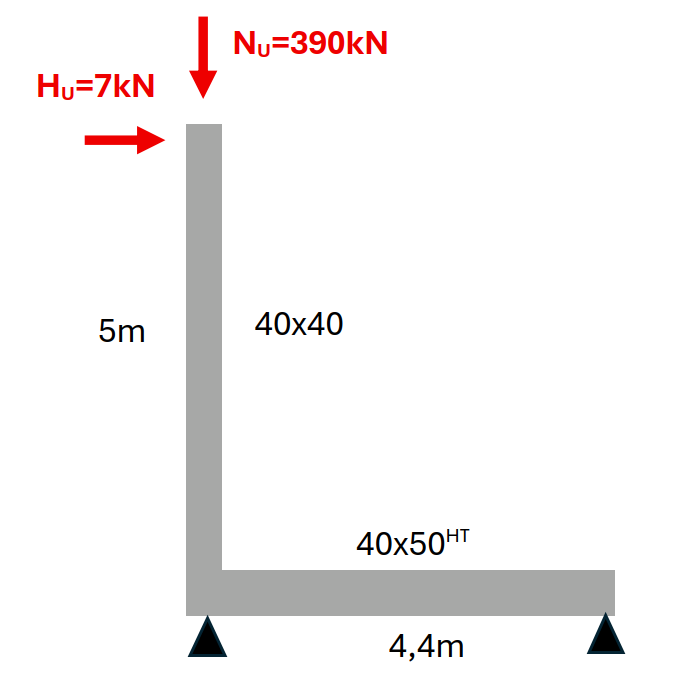
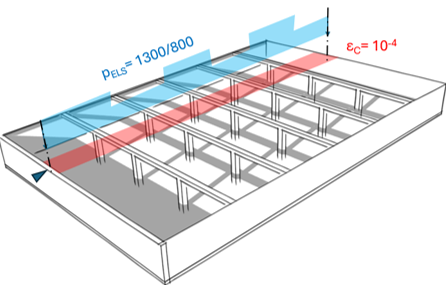
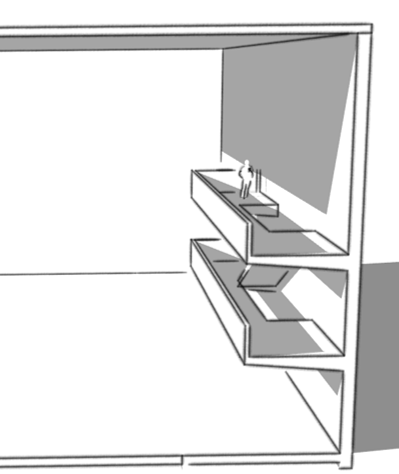
      The partially fixed mast is a common configuration of reinforced concrete structures, which nevertheless remains poorly documented in the literature. Yet a partial fixity is a delicate assumption to handle.

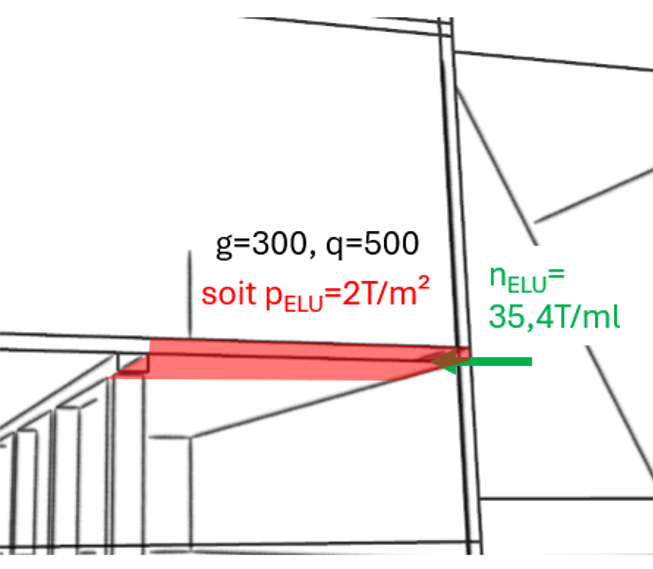
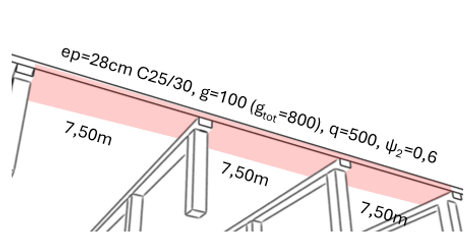
      This example offers a review of the data input process and the justification of such a calculation, according to the general EC2 method reduced to one critical section (MG1). It especially details various reminders and points of attention to monitor in order to successfully perform the design.

      The end of the example shows the exact solution to the problem and the possible optimisation made possible by the integral general method (IGM).


      Nicolas DUBREIL
      11 mins
      Published 03 March 2026
      Version 19 March 2026
      This article presents a general integral method (GIM) for the calculation of reinforced concrete columns and beams according to Eurocode 2

      An Integral General Method (IGM) in accordance with Eurocode 2

      This article presents the benefits of a nonlinear approach for the analysis of reinforced concrete line elements, intended to determine the unique solution of the mechanical problem — when it exists — by enforcing flexural and axial deformation compatibility at every point along the member.

      Inspired by the General Method and fully covered by Eurocode 2, this approach, referred to as the “Integral General Method” or IGM, opens up possibilities for analysing and optimising many common situations, from slender columns to continuous members in combined bending and compression.

      Nicolas DUBREIL
      11 mins
      Published 26 February 2026
      Version 19 March 2026
      Identify the vocabulary and the sequential logic “structural analysis → design of cross-sections” to better read and understand the code.

      Understanding Eurocode 2: terminology, calculation framework, and analysis–design logic.

      Identify the vocabulary and the sequential logic “structural analysis → design of cross-sections” to better read and understand the code.

      This article deciphers the precise semantics used in EC2 — analysis, design, actions, effects, mean and characteristic values — and shows how these definitions structure the entire code.

      It clarifies the two-step process (structural analysis followed by cross‑section design) and describes the different regulatory material behaviour laws associated with each step.

      This conceptual basis then makes it possible to understand the boundaries between the models involved, and in particular to address the issue of deformation compatibility.

      This topic constitutes the first part of a series dedicated to the flexural behaviour of reinforced concrete beams (1/4).

      Nicolas DUBREIL
      11 mins
      Published 11 March 2026
      Version 19 March 2026
      In hyperstatic structures, deformation compatibility dictates the exact distribution of moments — a challenge that the simplified EC2 methods only partially address.

      Hyperstatic Structures : the Unique Deformation‑Compatible Solution

      In hyperstatic structures, deformation compatibility dictates the exact distribution of moments — a challenge that the simplified EC2 methods only partially address.

      This article explains how a hyperstatic structure possesses, for each load case, a unique exact solution determined by the actual deformability of its sections and supports.

      It shows that internal forces depend closely on varying stiffness, reinforcement layout, progressive cracking and plastification, making the EC2 sequential approach sometimes insufficient.
      It also explores the conditions for nonlinear analysis, enabling the limitations of the “structural analysis → cross‑section design” framework to be overcome.

      This topic constitutes the third part of a series dedicated to the flexural behaviour of reinforced concrete beams (3/4).

      Nicolas DUBREIL
      8 mins
      Published 11 March 2026
      Version 19 March 2026
      Elastic structural analysis, limited redistribution, and plastic analysis. Study on an example, verification of ductility, and the limits of these models

      Continuous Beams : Plastic Hinges, Redistribution, and the Limits of Elastic Analyses

      Elastic structural analysis, limited redistribution, and plastic analysis. Study on an example, verification of ductility, and the limits of these models

      This article presents the four structural analysis methods proposed by Eurocode 2 for continuous beams, and shows how simplified approaches (elastic, limited redistribution, plastic) deliberately bypass the pursuit of the exact solution.

      It explains the mechanisms of hinge formation, the conditions for valid redistribution, the verification of plastic rotation capacity, and the biases of linear models when cracking and stiffness loss become predominant.
      Finally, it highlights possible discrepancies between simplified analysis and actual behaviour, especially regarding deflection, second‑order effects, and redistribution at SLS.

      This topic is the final part of our series dedicated to the flexural behaviour of reinforced concrete beams (4/4).

      Nicolas DUBREIL
      13 mins
      Published 11 March 2026
      Version 20 March 2026
      Introduction to the MG1 General Method of Eurocode 2 for the Design of Concrete Columns: Foundations, Usage Limitations, and Key Points of Attention.

      EC2 General Method and Usage Limitations – Principles

      Introduction to the MG1 General Method of Eurocode 2 for the Design of Concrete Columns: Foundations, Usage Limitations, and Key Points of Attention.

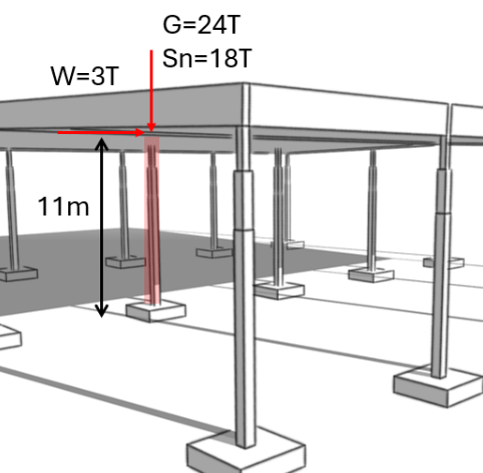
      The general method for column design according to Eurocode 2, and more specifically the simplified option of this method, referred to as MG1 in this document, is an important everyday tool for the reinforced concrete structural engineer. It makes it possible to significantly reduce the theoretical complexity of studying a slender reinforced concrete column or wall, by approximating second-order effects.

      However, this method has usage limitations and caution points that can sometimes be difficult to master, especially since spreadsheet implementations—commonly used in design offices—may hide certain important concepts.

      This four-part dossier offers a review of the different calculation steps of the general method, with a focus on various influential aspects. This Part 1 provides a reminder of the fundamentals of the general method.

      Nicolas DUBREIL
      8 mins
      Published 03 March 2026
      Version 19 March 2026
      Analysis of the Eurocode 2 General Method: The Impact of the Deformation Shape on the Design of Reinforced Concrete Columns.

      EC2 General Method and Usage Limitations – An Elastic Deformation

      Analysis of the MG1 General Method: The Impact of the Deformation Shape on the Design of RC Columns and Walls.

      The general method for column design according to Eurocode 2  is an important everyday tool for the reinforced concrete structural engineer. It makes it possible to significantly reduce the theoretical complexity of studying a slender reinforced concrete column or wall, by approximating second-order effects.

      However, this method has usage limitations and caution points that can sometimes be difficult to master, especially since spreadsheet implementations—commonly used in design offices—may hide certain important concepts.

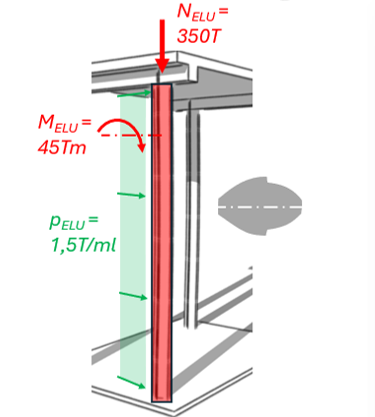
      This four-part dossier offers a review of the different calculation steps of the general method, with a focus on various influential aspects. This Part 2 provides a focus on one of the underlying assumptions of the method: the shape of the deformation.

      Nicolas DUBREIL
      8 mins
      Published 03 March 2026
      Version 19 March 2026
      Eurocode 2 MG1 General Method: Evaluation of the First-Order Moment and End Stiffnesses to Be Considered in the Design of Reinforced Concrete Columns and Walls.

      EC2 General Method and Usage Limitations – Lateral Loads and Support Stiffnesses

      MG1 General Method : Evaluation of the First-Order Moment and End Stiffnesses to Be Considered in the Design of Columns and Walls.

      The general method for column design according to Eurocode 2  is an important everyday tool for the reinforced concrete structural engineer. It makes it possible to significantly reduce the theoretical complexity of studying a slender reinforced concrete column or wall, by approximating second-order effects.

      However, this method has usage limitations and caution points that can sometimes be difficult to master, especially since spreadsheet implementations—commonly used in design offices—may hide certain important concepts.

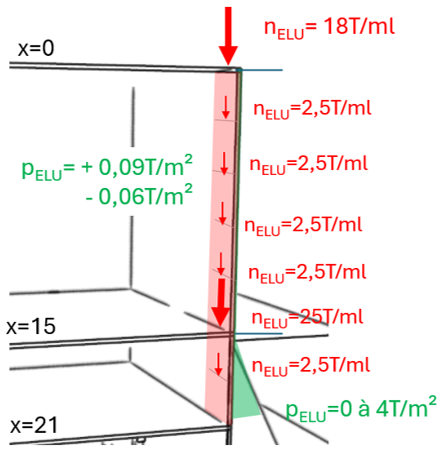
      This four-part dossier offers a review of the different calculation steps of the general method, with a focus on various influential aspects. This Part 3 details several key caution points regarding the determination of the first-order bending moment to be considered and the evaluation of the boundary stiffnesses to be adopted.


      Nicolas DUBREIL
      9 mins
      Published 03 March 2026
      Version 19 March 2026

      Page 1 of 2

      • 1
      • 2

       Didn't find the information you were looking for?


      Join the OpenLAB community now to access all articles, take part in technical discussions, and find the answer you're looking for!

      The content published on OpenLAB is the sole responsibility of its authors. It is provided for informational purposes only, without any guarantee of accuracy, completeness, or timeliness. Its use is entirely at the user’s own risk.
      © 2026 Laboratoire Structures et Applications / OpenLAB members – All rights reserved. Legal Notice – Privacy Policy – OpenLAB Terms of Use – contact@l-sa.eu

      • Categories
        • Scientific and Technical Articles – Community Contributions
        • Site Feedback – Structural Project Case Studies and Lessons Learned
        • Calculation Notes – Real Cases and Applications
        • Downloadable Calculation Tools – Utilities and Methodological Guides
        • Professional Insights – Shared Contributions and Industry Watch
      • Themes
        • Structural materials
          • Soil-Geotechnics
          • Concrete
          • Reinforced concrete
          • Prestressed concrete
          • Steel
          • Steel-concrete composite
          • Aluminium
          • Cable
          • Timber
          • Timber-concrete composite
          • Timber-steel composite
          • Stone
          • Earth
          • Other material
        • Types of works
          • Ground reinforcement
          • Special foundation
          • Foundation
          • Slab-mat suspended slab
          • Retaining wall
          • Framework
          • Column
          • Beam
          • Wall
          • Floor slab
          • Facade
          • Structure (roof)
          • Roof
          • Other structure
        • Study phases
          • Assumptions
          • Design
          • Structural analysis and sizing
          • Construction provisions
          • Drawing
          • Description-specification
          • Construction monitoring
          • Diagnosis
          • Rehabilitation
          • Other study
        • Types of analysis
          • Gravity load analysis
          • Bracing
          • Seismic analysis
          • Fire scenario analysis
          • Deformation
          • Vibration
          • Durability
          • Environmental impact
          • Pathology
          • Other analysis
      • Featured
      • About
        • The OpenLAB project
        • OpenLAB Terms and Conditions
        • Contact us
        • L-SA
      • Login