
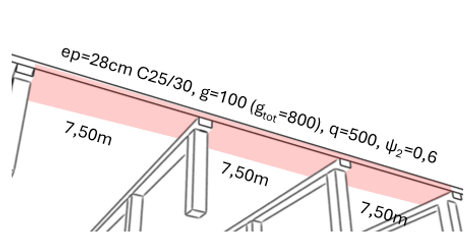
An approach to analyzing and designing horizontal structures subjected to shrinkage
Eurocode 2 is relatively precise in determining the evolution of concrete shrinkage over time. However, it remains much more succinct regarding how to incorporate this phenomenon into reinforced concrete design calculations.
Beyond deformations alone, the engineer is often faced with determining bending moments, axial forces, stresses in reinforcement, as well as crack widths, particularly in restrained shrinkage configurations.
The example presented below shows how the General Integral Method (GIM) makes it possible to capture physical phenomena that are often anticipated but difficult to access using conventional approaches. It progressively highlights:
- axial elongation under gravity loads,
- reduction of the cracking moment due to shrinkage,
- increase in curvatures and deflections,
- as well as the determination of tensile force in cases of restrained shrinkage.
- Nicolas DUBREIL
- 9 mins
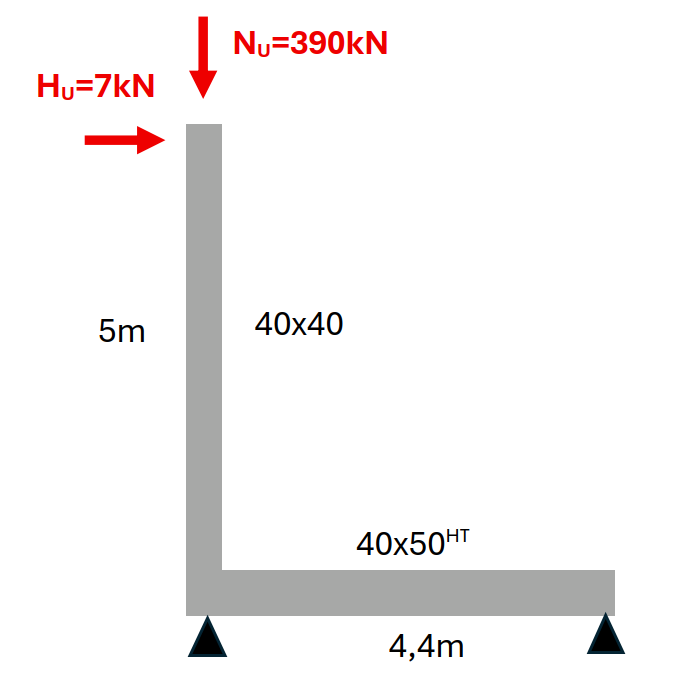
The partially fixed mast is a common configuration of reinforced concrete structures, which nevertheless remains poorly documented in the literature. Yet a partial fixity is a delicate assumption to handle.
This example offers a review of the data input process and the justification of such a calculation, according to the general EC2 method reduced to one critical section (MG1). It especially details various reminders and points of attention to monitor in order to successfully perform the design.
The end of the example shows the exact solution to the problem and the possible optimisation made possible by the integral general method (IGM).
- Nicolas DUBREIL
- 11 mins
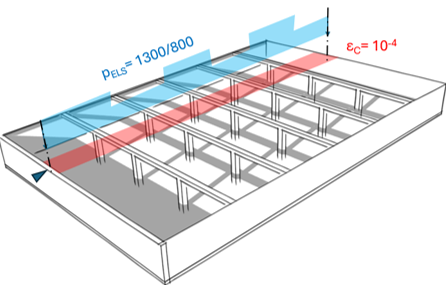
This article addresses a common situation in infrastructure slabs that are sensitive to shrinkage and thermal strain effects.
The proposed calculation method incorporates shrinkage directly into the concrete constitutive laws and evaluates the resulting shortening, lengthening and bending effects, depending on the slab’s continuity conditions, restraints, self‑stress mechanisms and cracking behaviour.
A sensitivity study is also performed, showing how the structural response varies depending on the orientation of the beams with respect to the long dimension of the slab, and highlighting several good‑practice considerations that may be of interest for design.
[Article to be published soon]
- Nicolas DUBREIL
- 1 min
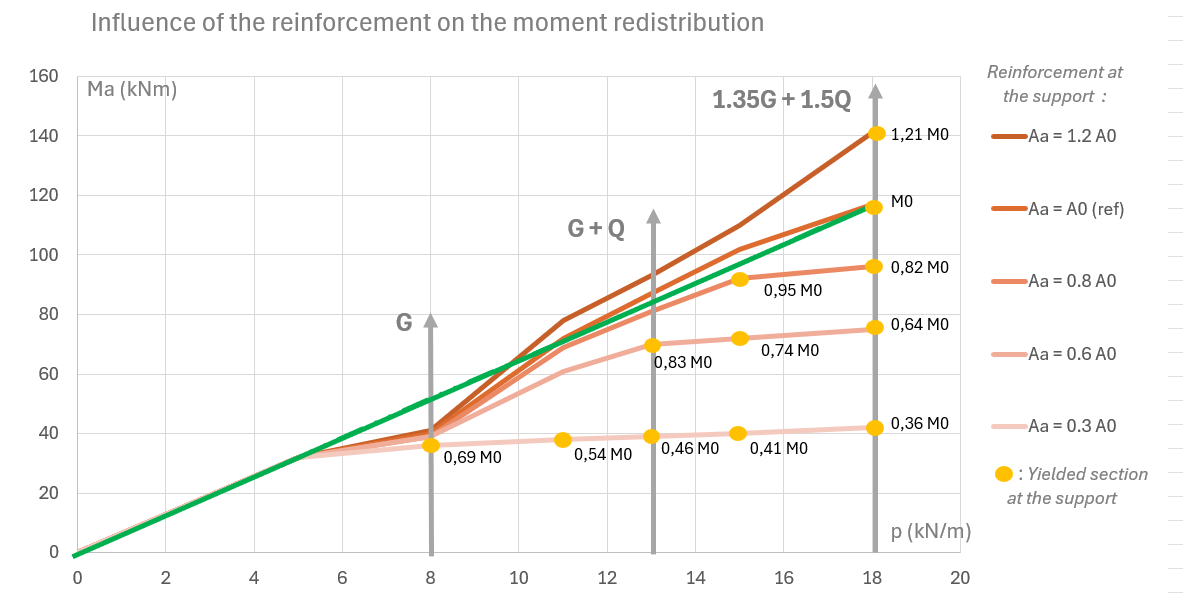
The behaviour of reinforced concrete flexural structures is intrinsically non-linear and depends on cracking and the progressive plastification of sections.
Compared with earlier generation codes (BAEL), Eurocode 2 now benefits from the theoretical contributions required to take these phenomena into account, notably enabling the calculation-based treatment of concrete adaptation, the formation of plastic hinges, moment redistribution, as well as deformation compatibility issues.
Depending on the required level of analysis, the code also allows simplified, regulated methods based on linear-elastic analyses, possibly combined with predefined moment redistributions.
These various approaches provide the calculation framework with a certain versatility and give the engineer a degree of flexibility suited to the diversity of situations encountered in practice.
While simplified analysis methods (§5.4 to §5.6) are widely used in practice, the present study proposes to utilize non-linear methods (§5.7) on simple cases in order to progressively highlight the mechanisms underlying structural analysis according to EC2, and to provide additional insight into linear-elastic analyses and redistribution practices.
- Nicolas DUBREIL
- 20 mins
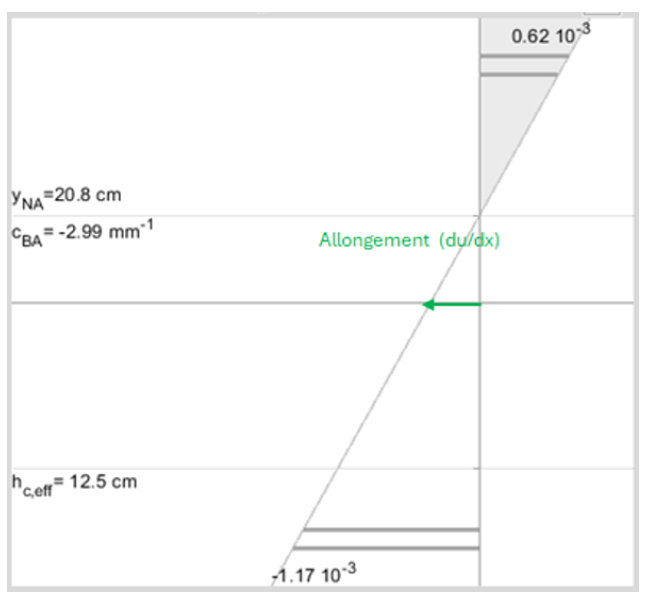
Analysis of a little‑known axial phenomenon: the elongation of simply‑bent RC beams under gravity loads, a direct consequence of reinforced‑concrete behaviour.
This article introduces the first axial effect observable in flexural reinforced‑concrete elements: the elongation of simply‑bent beams under gravity loads.
This phenomenon—often overlooked despite being non‑negligible—results directly from the fundamental behaviour of reinforced concrete, especially once cracking develops. Understanding it is essential before rigorously addressing the effects of thermal expansion and shrinkage.
It forms the first part of the series “Axial behaviour of flexural reinforced‑concrete elements” (1/4).
- Nicolas DUBREIL
- 6 mins
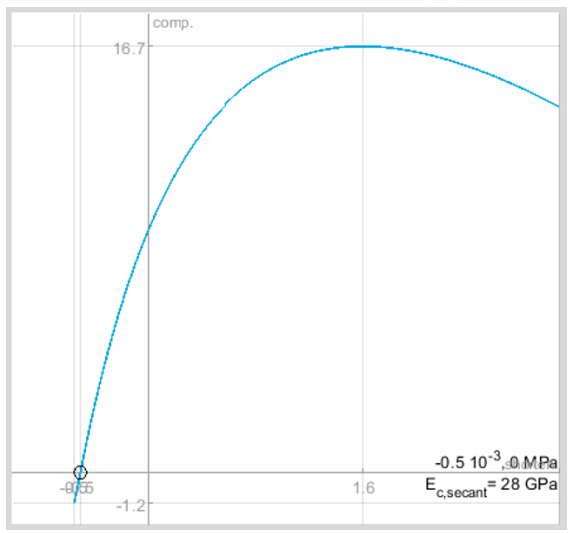
Thermo‑mechanical analysis of RC sections: constitutive laws, effects of thermal expansion and thermal gradients, and cases where EC2 requires their consideration.
This article examines the thermo‑mechanical behaviour of reinforced‑concrete members subjected to thermal expansion or thermal gradients, based on the assumptions of Eurocode 2.
It first analyses how the constitutive laws of concrete and steel are modified and how the mechanical diagrams of RC sections (strains, stresses, internal forces) evolve under thermal actions.
The article then reviews the regulatory situations in which thermal effects must be considered, illustrates the physical behaviour that can be observed, and presents the gravity/thermal concomitances that may become governing.
This is the second part of the series “Axial behaviour of flexural reinforced‑concrete elements” (2/4).
- Nicolas DUBREIL
- 8 mins
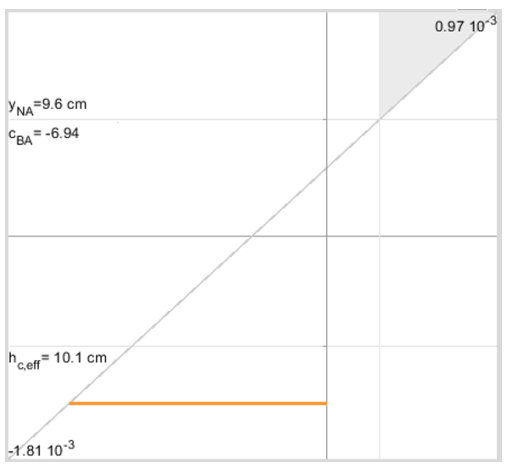
Analysis of concrete shrinkage, the induced self‑stresses, the differences with thermal effects, and the conditions for applying EC2 formula (7.21).
This article examines the mechanical behaviour of reinforced concrete subjected to shrinkage, highlighting the fundamental differences between shrinkage and thermal effects, and introducing the notion of self‑stresses that develop within the section.
It then analyses how the constitutive laws of concrete and steel are modified and how the mechanical diagrams of a reinforced‑concrete section (geometry, strains, stresses, internal forces) evolve under shrinkage.
Finally, the article clarifies the conditions under which Eurocode 2 formula (7.21)—used to estimate the curvature of a flexural member due to shrinkage—can be validly applied.
This contribution forms the third part of the series “Axial behaviour of flexural reinforced‑concrete elements” (3/4).
- Nicolas DUBREIL
- 9 mins
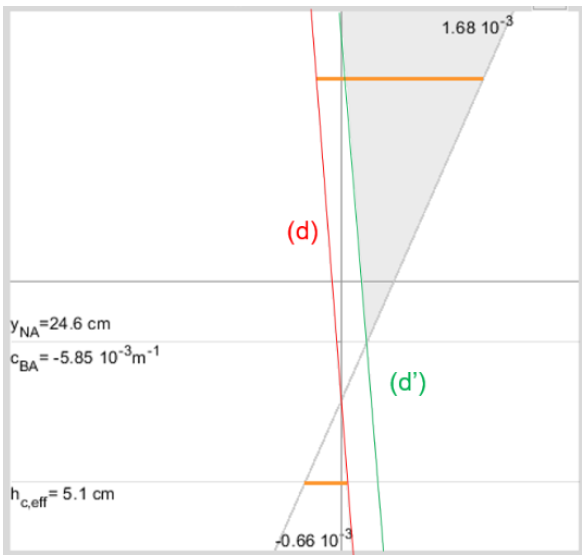
Synthesis of simultaneous axial effects: shrinkage, thermal actions, gravity‑induced elongation, cracking, and the limitations of elastic analyses.
This final part broadens the analysis of axial effects by considering the concomitance between shrinkage, thermal expansion and gravity‑induced elongation, as well as the impact of cracking.
The article highlights several points of vigilance regarding the elastic structural analysis of axial effects, and proposes that shrinkage studies should systematically include the effect of gravity‑induced elongation, and that thermal analyses at the characteristic SLS should jointly include shrinkage + gravity effects.
It constitutes the fourth part of the series “Axial behaviour of flexural reinforced‑concrete elements” (4/4).
- Nicolas DUBREIL
- 11 mins
