
 FR
FR 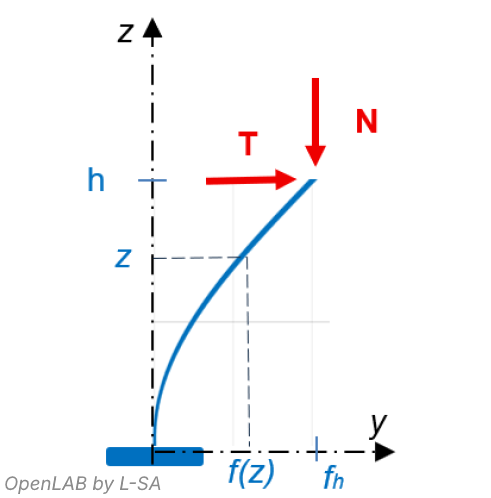
Introduction to the MG1 General Method of Eurocode 2 for the Design of Concrete Columns: Foundations, Usage Limitations, and Key Points of Attention.
The general method for column design according to Eurocode 2, and more specifically the simplified option of this method, referred to as MG1 in this document, is an important everyday tool for the reinforced concrete structural engineer. It makes it possible to significantly reduce the theoretical complexity of studying a slender reinforced concrete column or wall, by approximating second-order effects.
However, this method has usage limitations and caution points that can sometimes be difficult to master, especially since spreadsheet implementations—commonly used in design offices—may hide certain important concepts.
This four-part dossier offers a review of the different calculation steps of the general method, with a focus on various influential aspects. This Part 1 provides a reminder of the fundamentals of the general method.
- Nicolas DUBREIL
- 8 mins
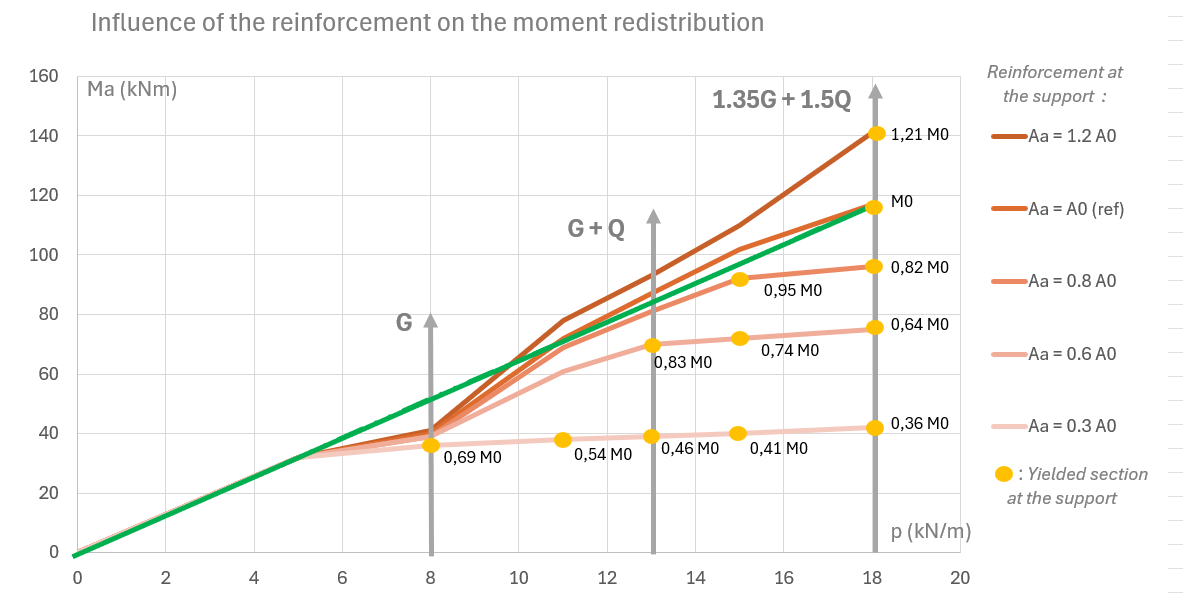
The behaviour of reinforced concrete flexural structures is intrinsically non-linear and depends on cracking and the progressive plastification of sections.
Compared with earlier generation codes (BAEL), Eurocode 2 now benefits from the theoretical contributions required to take these phenomena into account, notably enabling the calculation-based treatment of concrete adaptation, the formation of plastic hinges, moment redistribution, as well as deformation compatibility issues.
Depending on the required level of analysis, the code also allows simplified, regulated methods based on linear-elastic analyses, possibly combined with predefined moment redistributions.
These various approaches provide the calculation framework with a certain versatility and give the engineer a degree of flexibility suited to the diversity of situations encountered in practice.
While simplified analysis methods (§5.4 to §5.6) are widely used in practice, the present study proposes to utilize non-linear methods (§5.7) on simple cases in order to progressively highlight the mechanisms underlying structural analysis according to EC2, and to provide additional insight into linear-elastic analyses and redistribution practices.
- Nicolas DUBREIL
- 20 mins
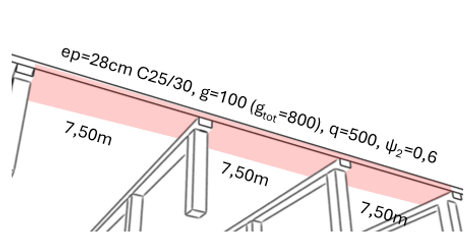
An approach to analyzing and designing horizontal structures subjected to shrinkage
Eurocode 2 is relatively precise in determining the evolution of concrete shrinkage over time. However, it remains much more succinct regarding how to incorporate this phenomenon into reinforced concrete design calculations.
Beyond deformations alone, the engineer is often faced with determining bending moments, axial forces, stresses in reinforcement, as well as crack widths, particularly in restrained shrinkage configurations.
The example presented below shows how the General Integral Method (GIM) makes it possible to capture physical phenomena that are often anticipated but difficult to access using conventional approaches. It progressively highlights:
- axial elongation under gravity loads,
- reduction of the cracking moment due to shrinkage,
- increase in curvatures and deflections,
- as well as the determination of tensile force in cases of restrained shrinkage.
- Nicolas DUBREIL
- 9 mins

The opportunity to carry out a structural diagnosis of the Fort of Socoa made it possible to study the mechanical behaviour of an annular vault under seismic loading.
Far from modern engineering structures, this military construction raises fundamental questions.
- What modelling strategy should be used in an engineering context?
- How can the stereotomy and complex shapes of such a structure be approached?
- How should the seismic issue be considered within a regulatory framework sometimes ill-adapted to historic structures?
- What are the expected failure modes, and how do they compare to those of classical masonry structures?
- Which indicators and stability criteria should be retained?
To answer these questions, we propose a comprehensive methodology combining parametric geometric generation and structural analysis using the discrete element method.
This study reveals a unique collapse mechanism, hybrid between that of a dome and that of an arch. Above all, it once again demonstrates the ability of masonry to reach a new equilibrium state despite the presence of cracking, confirming the resilience of stone structures. This study thus offers a pathway for the structural justification of complex masonry works subjected to seismic actions.
- Vincent VENZAL
- 18 mins
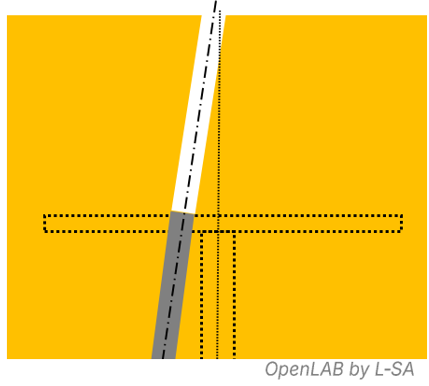
The relationship between structural works and special foundations relies largely on the Load Transfer Document (LTD), which, beyond a simple listing, can play a truly structuring role in the project design and in defining the interface between trades.
When advantageously supplemented with information such as execution tolerance management and the stiffness to consider at the top of each pile, the LTD becomes a key element — relayed by the technical specifications (STS) — to clarify the boundary between trades and secure the design.
This article provides specific insight into these sometimes‑confusing geometric, mechanical, and contractual aspects, and shows the value of documenting them early on.
- Nicolas DUBREIL
- 25 mins

Welcome!
OpenLAB has gathered this selection of recent articles to help you discover the platform. Enjoy your reading!